Weipin Tsai
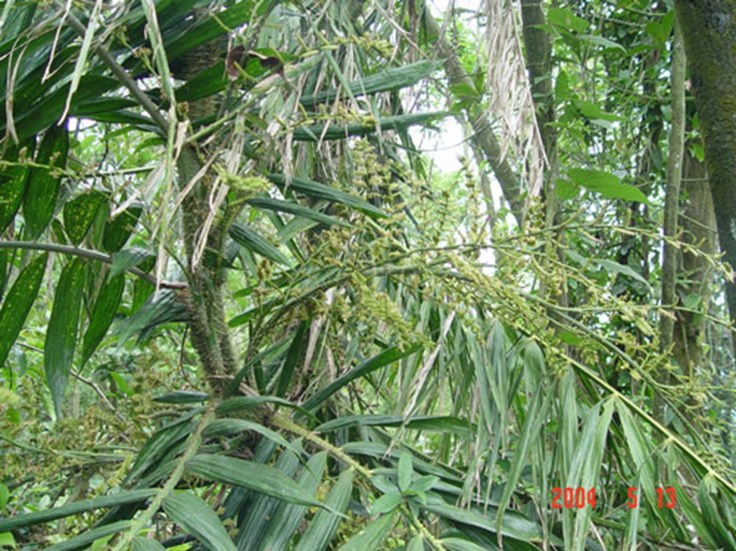
The Yellow Rotang Palm (Calamus jenkinsianus) is a common plant in Taiwan. Also known as rattan or cane palm, it grows widely all over Taiwan, from 300 metres altitude to 2,000 metres, often in a thicket alongside bamboo and other varieties of plants. For indigenous people in the 19th and early 20th century, rattan was a very important plant. Young specimens were used in cooking and medicine, while the mature plant, up to several meters tall, had great economic value for the making of rattan work. Despite being very thorny on its steins and leaves, the skin of the plant could be made into rope. Rattan was also used in hunting, to create animal traps.
Filmed by Chen Chian-fan. Digital Taiwan – Culture & Nature, http://catalog.digitalarchives.tw/item/00/6d/35/08.html
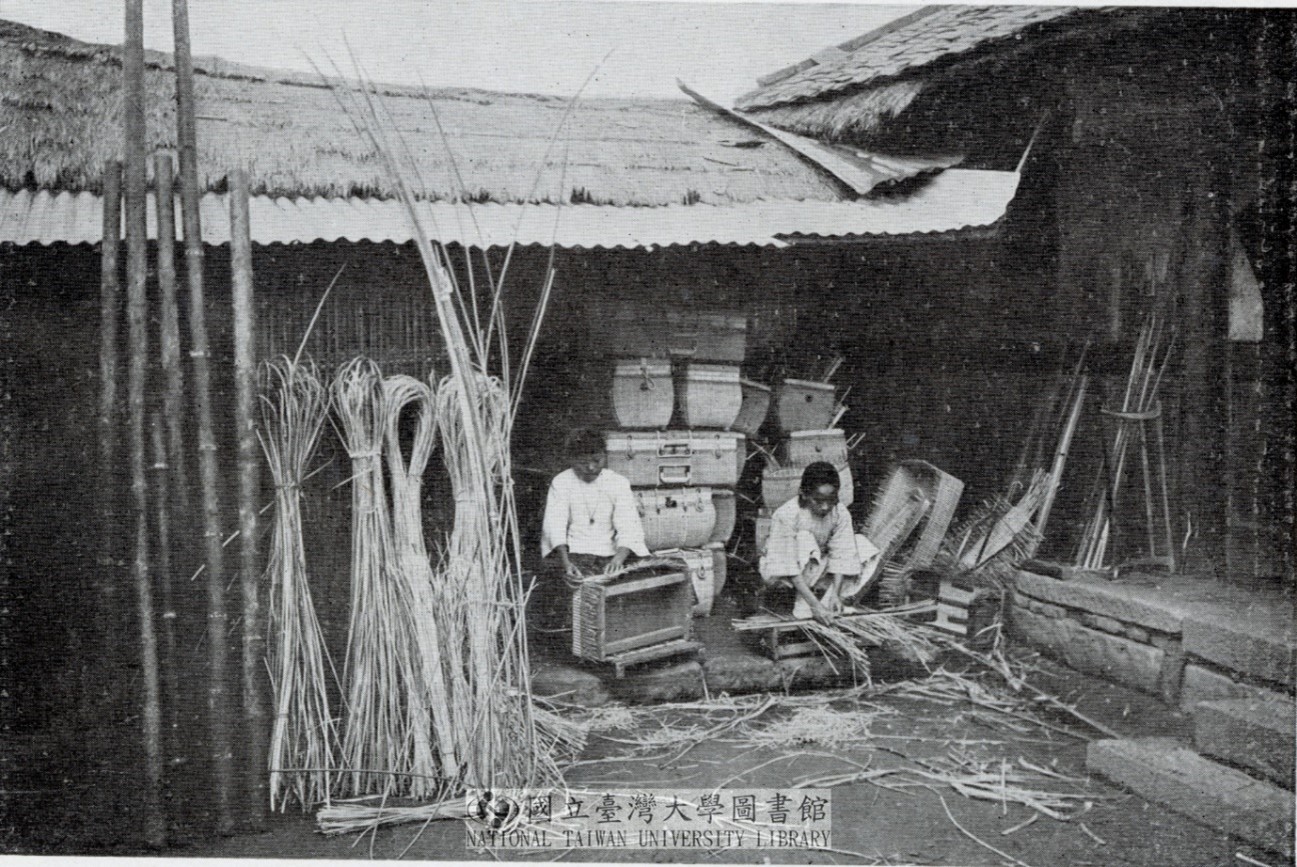
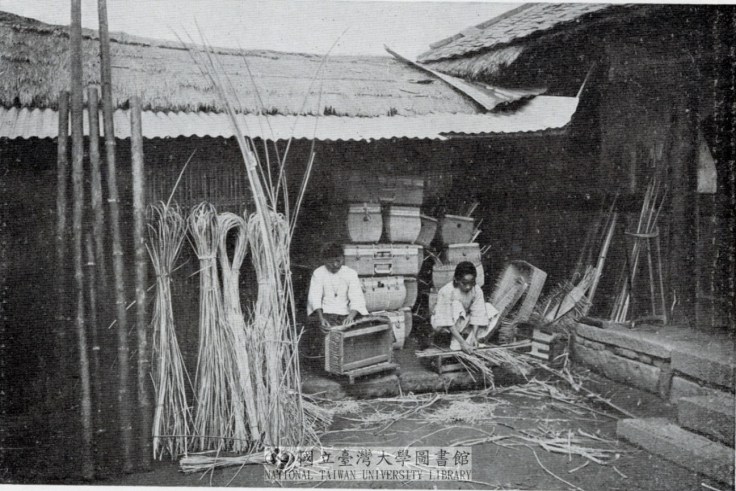
During the Japanese colonial period (1895-1945), rattan craft was an important source of income for many households (see image 2). Rattan-made baskets and containers were commonly used for packaging products such as sugar and rice. In common with other locations in Asia including India and Indonesia, rattan was also a common material for furniture.
Courtesy of National Taiwan University Library
Courtesy of National Taiwan University Library
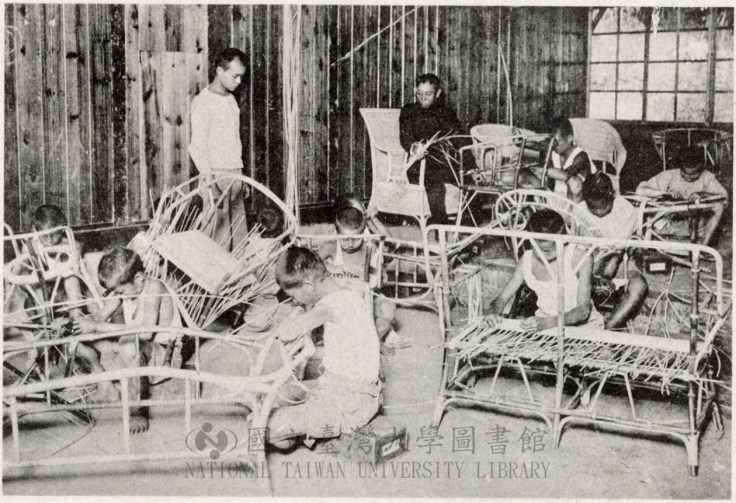
In 1909, Chengde Juvenile Detention Centre was established on the hillside outside of Taipei, at first receiving problem boys under the age of 14, and later extended to under 18. The centre advocated re-education based on Buddhist teaching, alongside training in craft skills. Image 3 was taken in 1934, and shows young inmates making rattan furniture, while the teacher sits on a rattan armchair.

 Centre for Global South Asia
Leave a comment